
In the US? See US chair massage prices.
The short answer: as a sole trader, charge at least £60 an hour for on-site chair massage. Established businesses and limited companies often charge around £100 an hour, and some charge up to £150, particularly in London. Quote one clear price for the day, with your set-up time already built in. In practice, that puts chair massage prices at roughly £15 to £25 per person.
Pricing is the question we hear most from therapists starting out in corporate work. We've been running on-site chair massage days since 2017, mostly at offices, so this guide is based on what has worked for us. Charge too little and a long day out of the house barely covers your costs. Charge without a clear structure and the client's HR or office manager can't compare you with anyone else. This guide walks through how UK therapists price office chair massage, with worked examples you can adapt.
Why £60 an hour is the floor, not the target
£60 an hour sounds like a lot until you count the hours you aren't paid for. As a self-employed therapist you don't get holiday or sick pay (GOV.UK), and every on-site day comes with time and costs around the massage itself:
- travel there and back, and parking
- arriving early to set up and staying to pack away
- couch roll, face-rest covers, wipes and hand sanitiser
- wear on your chair, and replacing it in time
- insurance and professional membership
- admin: quotes, invoices, emails and chasing payment
- quieter months, when fewer companies book
Here's what that does to your real hourly rate. Say a client books six hours of massage at £60 an hour, so £360. Add two 30-minute breaks and an hour to set up and pack away, and you're on site for eight hours. That's £45 an hour before you've paid for anything else.
A rate of £60 an hour allows for a normal journey to a local client. What's easy to forget is set-up time, so make sure your price covers it. If a client is a long way from you, raise your hourly rate for that job to cover the extra travel, or ask whether they'll pay travel costs on top (more on that below).
Our advice to therapists new to corporate work: understand your value and what the market pays, and don't go below £60 an hour.
Sole trader or limited company?
Therapists working for themselves usually start around £60 an hour. Established businesses and limited companies, often with a team of therapists, more commonly charge around £100 an hour, and some charge up to £150. Larger companies are used to paying supplier rates, and a limited company, a proper quote and clear terms all help them see you as a supplier rather than a favour.
As an example, we started at £60 an hour. Today we use a sliding scale based on the hours booked: £120 an hour for a short booking, coming down to £90 an hour for longer days, and a little less again when a company commits to a longer-term arrangement. A short booking costs you nearly as much in travel and set-up as a full day, so it makes sense for it to cost more per hour.
You can also justify a higher price when you organise the booking yourself, instead of leaving the company to sort out a sign-up sheet. Onsite Days does that for you: you send the company one booking link, people pick their own slots, and you can see who's booked in on your phone. It takes the stress away from the company, and makes the day easier for you to run.
If your business is registered for VAT, make it clear whether your price includes VAT. A company comparing quotes will notice. You must register once your VAT-taxable turnover for the last 12 months goes over £90,000, or if you expect it to go over £90,000 in the next 30 days (GOV.UK).
Slot lengths, and how many people you can see
Most on-site chair massages last 15 or 20 minutes. Some companies ask for 10 minutes, but that's often too short for people to relax and feel the benefit. Longer sessions, up to 30 minutes, suit smaller groups or a reward day.
The slot length decides how many people you see, which is what most clients really want to know:
| Slot length | People an hour | People in six hours |
|---|---|---|
| 10 minutes | 6 | 36 |
| 15 minutes | 4 | 24 |
| 20 minutes | 3 | 18 |
| 30 minutes | 2 | 12 |
In practice, leave a few minutes between people to wipe down the chair and reset, and proper breaks for yourself: ideally 30 minutes every 2 hours, and no more than six hours of massage in a day, although some therapists work longer. With a few minutes between people you'll see a few fewer than the table shows, but a short gap between slots makes the day run on time instead of slowly falling behind.
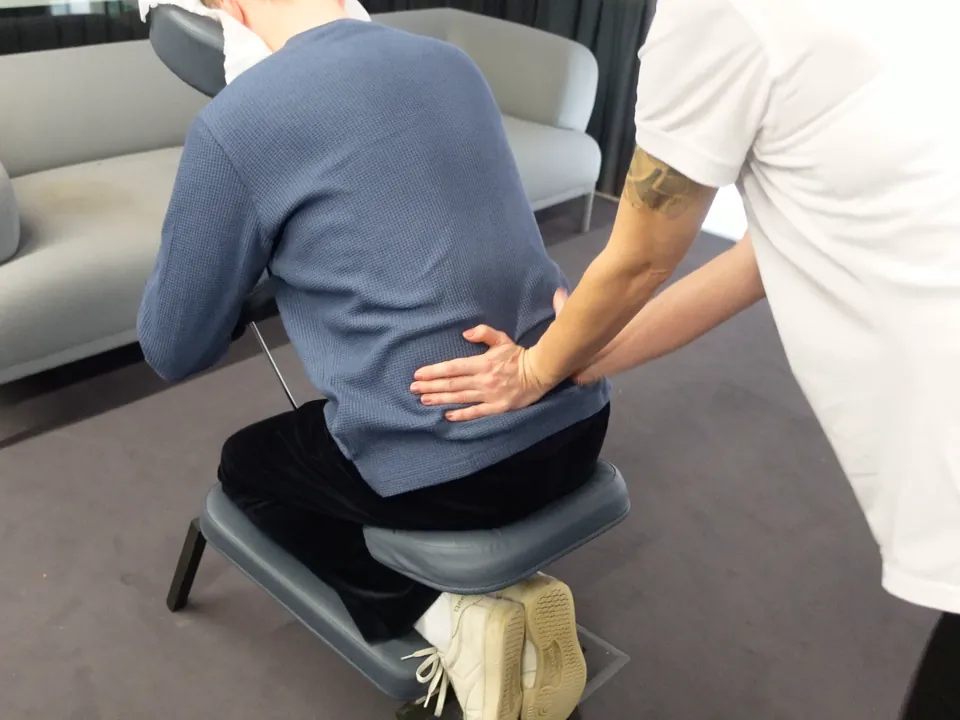
Worked examples: chair massage prices for a half and full day
Here's how the numbers come out for one therapist, using the slot lengths above. Your breaks come on top of the massage hours.
- Half day, three hours, at £60 an hour: £180. With 15-minute slots that's 12 people, about £15 each.
- Full day, six hours of massage (seven hours on site with your breaks), at £60 an hour: £360. With 20-minute slots that's 18 people, £20 each.
- Full day at £100 an hour: £600. With 15-minute slots that's 24 people, £25 each.
The cost per person is worth showing in your quote. "£25 per person" is easier for a company to approve than a day rate on its own, and it helps them decide how many people to offer it to.
Give one price, not a list of extras
Companies rarely want to see separate charges for parking, set-up time or supplies. They want one number they can approve. So work those costs out before you quote, and build them into your hourly or day rate.
Travel is the one to think about separately. If a client is a long way from you, raise your hourly rate for that job to cover it. Some companies are happy to pay travel costs on top when they know you're coming a long way, but they won't usually offer, so you need to ask them.
Have a cancellation policy
Office plans change: a fire drill, a board meeting, a team away day. If a client cancels the day before, you've usually turned down other work and can't fill the gap. Put a cancellation policy in writing before the first booking, and include it with every quote. For example:
- more than 7 days' notice: no charge
- 2 to 7 days' notice: 50% of the price
- less than 48 hours' notice: the full price
Those numbers are an example to adapt, not a rule. What matters is that the client agrees to the policy before the day, so there's no awkward conversation afterwards.
Offer a better rate for regular days
One-off days are useful, but regular visits are what make corporate work steady. Many therapists offer a lower rate when a company commits to sessions in advance, for example a visit every month for six months. Something like £100 an hour for a one-off day and £90 an hour for a booked series rewards the commitment, and fills your diary months ahead.
Where you work makes a difference
Rates in London tend to be higher than in other parts of the UK, reflecting higher costs for clients and therapists alike. Before you set your prices, look at what other on-site massage providers near you publish, and ask clients what they've paid before. Most will tell you.
Helping the client say yes
The person booking you usually has to justify the spend. A couple of credible facts help:
- Deloitte found that poor mental health costs UK employers £51 billion a year, and that on average employers get back nearly £4.70 for every £1 they spend supporting their people's mental health (Deloitte, 2024). That figure covers workplace mental health support in general, not massage on its own, so present it that way.
- The CIPD's 2023 survey found sickness absence at its highest level for over a decade, an average of 7.8 days per employee (CIPD, 2023).
In our experience, convenience is what convinces a company most: knowing there will be very little for them to organise. It's also what makes the day itself go well. The only days we've had go wrong were when staff organised the booking list themselves. People swapped slots or cancelled on a shared spreadsheet, and by the day nobody was sure who was coming when. The days that run smoothly are the ones booked through a proper booking system, where people book their own slots from one link, get their own confirmations, and the client receives a simple report afterwards. That's the hassle a booking tool made for chair massage days, such as Onsite Days, removes, and it's a good reason a client will accept a higher price. For more on this, see how to organise bookings for an office chair massage day.
A business card. The person who books you will often pass your details on. Make one with our free business card maker.
Quick checklist before you quote
- Your hourly rate: at least £60 as a sole trader
- Slot length agreed: usually 15 or 20 minutes
- How many people that means, and the price per person
- Set-up, parking and supplies built into one price
- Long journeys covered: a higher rate, or travel costs agreed with the client
- Breaks planned: ideally 30 minutes every 2 hours
- VAT made clear, if you're registered
- Your cancellation policy attached
- A better rate offered for regular, pre-booked days